

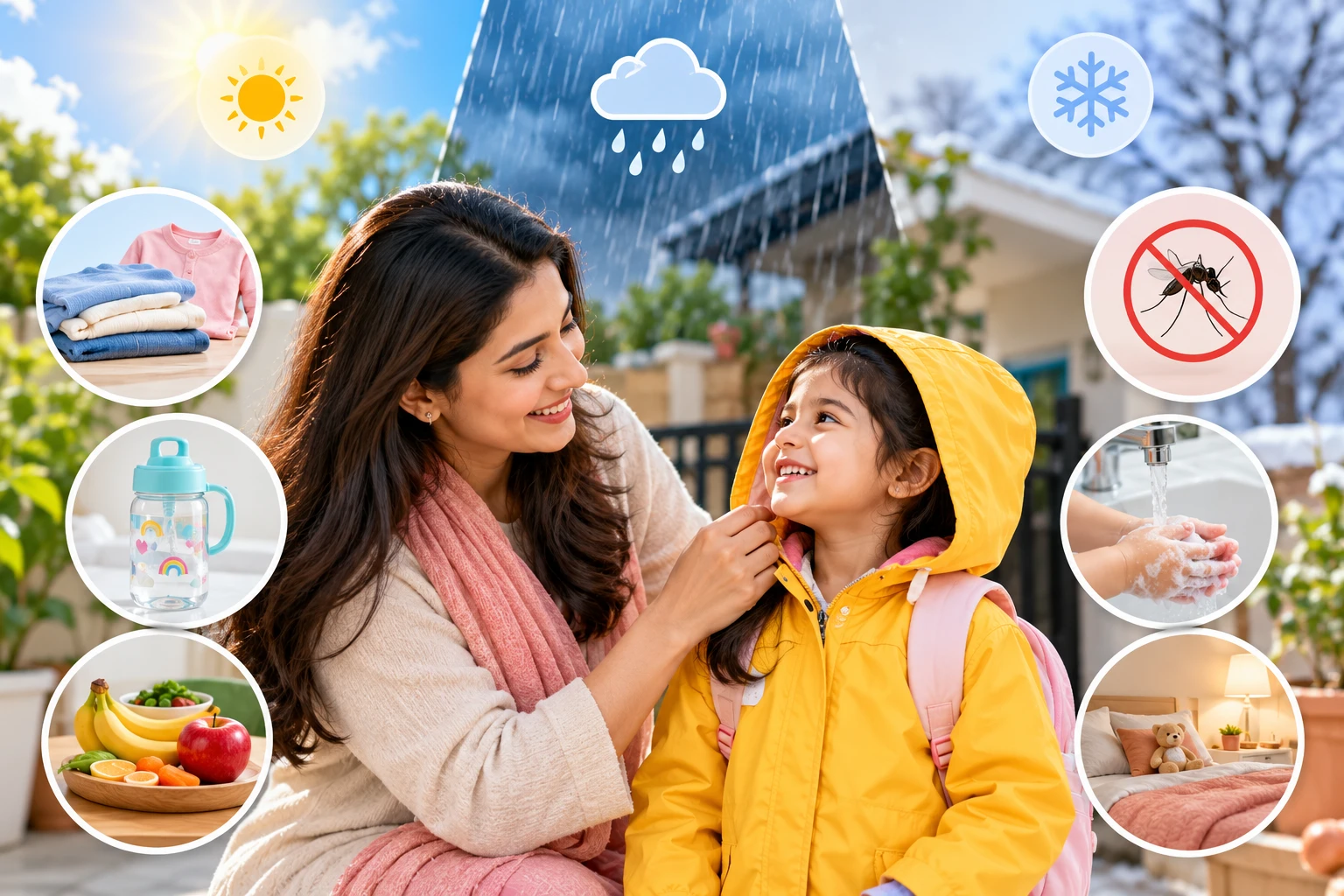
Changing Weather in India: Practical Steps for Parents
In India, a cool morning can turn hot by lunchtime, and a clear afternoon can end in heavy rain. Children may leave home dressed for one kind of weather and return in another, so parents often need to plan for both.
A few practical habits can keep them comfortable and reduce avoidable health risks as the seasons shift.
1. Dress for the Day's Weather
Dress your child for the conditions outside rather than for the season alone. Light, breathable clothes work well in warm weather, and an extra layer is useful when mornings or evenings are cool.
If clothes or shoes get wet in the rain, change them as soon as possible and dry the child properly.
2. Offer Water Regularly
Children rarely stop playing to ask for water. Offer a few sips before they go outside, when they come back in, and with meals instead of waiting until they complain of thirst.
On hot, humid days, they may need more fluids than usual. Clean water should come first; homemade drinks and soups can add variety.
Send your child to school or on a journey with a clean water bottle and remind them to take small sips during the day. Check that the bottle is actually being used. A dry mouth, headache, unusual tiredness, or dark yellow urine can mean they have not had enough to drink.
3. Prevent Mosquito Breeding
Mosquito numbers usually rise during and after the monsoon. Even a small amount of water left in a cooler, bucket, flowerpot, tyre, or uncovered container can become a breeding spot.
Empty standing water regularly. Use mosquito nets, window screens, and repellents that are suitable for children.
4. Take Extra Care on Rainy Days
Wet roads and floors are easy to slip on, and puddles may contain dirty water.
Keep children away from stagnant or visibly dirty water. After they have been out in the rain, change wet clothes, dry them well, and let their footwear dry fully before it is worn again.
5. Check the Air Quality
In some parts of India, pollution becomes worse at certain times of year, particularly in winter. Smoke, dust, and traffic fumes can irritate a child's eyes and airways.
Check the local air-quality level before a long outing. If it is poor, keep outdoor play brief and avoid busy roads, smoke, and dusty areas.
6. Keep Your Home Clean and Dry
Damp rooms can develop mould, which may bother children who are sensitive to dust or have breathing problems.
Air rooms when the outdoor air is clean, wash bedding regularly, and never put away clothes, towels, or mattresses while they are still damp.
7. Make Handwashing a Habit
At school, at home, and outdoors, children touch many shared or dirty surfaces. Regular handwashing lowers the chance of carrying germs to the mouth, nose, or eyes.
Ask them to wash their hands:
· Before meals
· After using the toilet
· After outdoor play
· After returning from school
· After touching visibly dirty surfaces
Frequent reminders at first will help the habit become routine.
8. Serve Fresh, Nutritious Food
Regular meals made with fresh fruit, vegetables, pulses, grains, and other wholesome foods give children the energy and nutrients they need.
Wash fruit and vegetables well. During the monsoon, be especially careful with food or drinking water if its hygiene is uncertain.
9. Notice Changes in Your Child's Health
You know your child's normal appetite, energy, and behaviour. A clear change in any of these may be an early sign that they are unwell.
Look out for:
· Fever
· Cough
· Runny nose
· Difficulty breathing
· Vomiting
· Loose motions
· Unusual tiredness
· Skin rashes
· Loss of appetite
Speak to a doctor if the symptoms are serious, do not improve, or worry you.
10. Use Medicines Only with Proper Advice
Never give a child antibiotics or prescription medicine on your own.
The same symptom can have several causes, and the right treatment depends on the diagnosis. If your child has a fever or another health concern, ask a qualified healthcare professional what to do before giving medicine.
Quick Reminders for Parents
Changing weather does not always make children ill. What matters most is how well they are prepared and cared for from day to day.
The basics are straightforward:
· Keep children clean and dry.
· Offer water throughout the day.
· Choose clothing that suits the temperature.
· Protect them from mosquitoes.
· Keep the home and nearby areas clean.
· Check local air quality when necessary.
· Encourage regular handwashing.
· Serve fresh, nutritious food.
· Pay attention to unusual symptoms.
· Seek medical advice when needed.
Final Thoughts
Weather changes are unavoidable, but many everyday problems are not. Planning ahead helps children move through each season with less discomfort.
Match clothing to the temperature, keep drinking water available, serve clean food, maintain good hygiene, and limit exposure to mosquitoes and polluted air. Just as importantly, notice when your child is not acting like themselves.
Simple routines and prompt medical advice when needed are often enough to help children stay well as conditions change.





Related Blog
Winter Care for Newborn Babies: Simple Precautions Every Parent Should Take
Dec 2, 2025 by Maalove
Bold Collections